Blog

  • Political Complexities and Social Hierarchies: Recurring Themes in Chaucer’s Works

    Geoffrey Chaucer, an English poet, civil servant, and writer, is still regarded as the father of English Literature. His significant works, The Book of the Duchess (c. 1368), The House of Fame (c. 1379), Troilus and Criseyde (c. 1380s), and The Canterbury Tales (c. 1387–1400), reflect the complexities of his era through recurring themes. These poems with such themes blend medieval traditions with proto-humanist perspectives, influenced by his exposure to French, Italian, and classical literature.

    Social Hierarchy and Mobility

    Chaucer’s England was rigidly stratified, yet the Black Death and economic shifts created opportunities for social mobility. The Canterbury Tales captures this through its diverse cast of pilgrims, from the noble Knight to the coarse Miller.

    Example: “The Wife of Bath”, a wealthy cloth-maker, challenges gender and class norms, boasting of her economic independence and sexual agency. Her tale critiques patriarchal marriage while reflecting the rising influence of the merchant class.

    Significance: Chaucer’s inclusion of lower-class voices, like the Miller or the Reeve, alongside nobles, mirrors the social tensions of his time, where traditional hierarchies were questioned.

    Courtly Love and Chivalry

    Influenced by French romance traditions and the chivalric ideals of the Hundred Years’ War, Chaucer explores courtly love in works like Troilus and Criseyde and “The Knight’s Tale”.

    Example: In Troilus and Criseyde, the Trojan prince Troilus’s idealised love for Criseyde is tested by betrayal and war, blending romance with philosophical reflections on fate and free will, inspired by Boccaccio’s poem Il Filostrato.

    Significance: Chaucer often subverts chivalric ideals with irony, as in “The Knight’s Tale”, where noble love leads to rivalry and tragedy, reflecting the era’s complex views on honour and warfare.

    Satire and Critique of Corruption

    Chaucer’s works frequently satirise institutional corruption, particularly within the Church, which was criticised for greed and hypocrisy during the late 14th century.

    Example: In The Canterbury Tales, “the Pardoner” and “the Summoner” embody ecclesiastical abuse, selling fake relics or exploiting their authority for profit. “The Pardoner’s Tale”, a moral story about greed, is ironic given his own avarice.

    Significance: This reflects the growing anticlerical sentiment of the time, influenced by figures like John Wycliffe, whose Lollard movement criticised Church wealth and corruption.

    Humanism and Individuality

    Chaucer’s exposure to Italian writers, such as Dante, Petrarch, and Boccaccio, during his 1372–1373 travels introduced him to early humanist ideas, emphasising individual experience and reason.

    Example: Characters like “the Wife of Bath” or “the Merchant” in The Canterbury Tales are vividly individualised, with distinct voices and motivations, unlike the allegorical figures familiar in medieval literature.

    Significance: This proto-humanist focus on human complexity anticipates Renaissance literature, distinguishing Chaucer from his contemporaries.

    Language and Vernacular Identity

    Chaucer’s use of Middle English, rather than Latin or French, was revolutionary. English was considered a “vulgar” language, but Chaucer’s polished verse elevated its literary status.

    Example: The Canterbury Tales employs varied linguistic registers, from the elevated style of “he Knight to the bawdy colloquialisms of the Miller, reflecting England’s linguistic diversity.

    Significance: By writing in Middle English, Chaucer helped standardise the language, contributing to a national literary identity during a time when French still dominated courtly literature.

    Fortune and Fate

    The medieval concept of Fortune’s Wheel, where human fortunes rise and fall unpredictably, is reflected in Chaucer’s works, which reflect the era’s uncertainty amid plague, war, and political upheaval.

    Example: In Troilus and Criseyde, the lovers’ fates are shaped by war and betrayal, with Chaucer invoking the goddess Fortune to underscore life’s unpredictability.

    Significance: This theme resonates with the era’s philosophical debates, influenced by the Roman philosopher Boethius’s philosophical work On the Consolation of Philosophy, which Chaucer translated as Boece.


    To Sum Up

    The “Age of Chaucer” represents a pivotal moment in English history, where social, political, and cultural shifts laid the groundwork for the early modern era. By writing in Middle English and creating psychologically complex characters, Chaucer bridged medieval and Renaissance traditions, earning him the title “father of English literature.” His works reflect the era’s tensions, including class struggles, religious critique, and the interplay of chivalry and pragmatism, while offering timeless insights into human nature. Chaucer’s influence on the English language and literature endures, with The Canterbury Tales remaining a cornerstone of Western literature for its vivid portrayal of medieval society and its universal themes.

  • Impacts of the Historical Period during the Age of Chaucer

    Impacts of the Historical Period during the Age of Chaucer

    Chaucer’s Lifespan (c. 1343–1400)

    Geoffrey Chaucer was born around 1343 in London, likely in the bustling commercial area near the Thames where his father, John Chaucer, worked as a prosperous vintner. The exact date of his birth is uncertain, as medieval records rarely noted such details for non-nobles. Still, evidence from court documents, such as a 1386 testimony where he described himself as “forty years old and more,” supports the 1343 estimate. He died on October 25, 1400, at approximately 57 years old, a notable age given the era’s high mortality rates from disease and poor sanitation. His burial in Westminster Abbey marked his significance, initiating what later became Poets’ Corner.

    The Historical Period: The Late 14th Century

    The “Age of Chaucer” refers to the late 14th century (roughly 1340–1400), a period of significant upheaval and transformation in England. This era sat at the cusp of the High Middle Ages and the early Renaissance, characterised by a period of profound change, and specific historical details illuminating how his environment shaped Chaucer’s life and works.

    The Black Death and Its Aftermath

    Impact: The plague’s devastation reduced England’s population significantly, leading to labour shortages and wage inflation.

    Social Consequences: The resulting social mobility challenged feudal structures, as peasants demanded higher wages. The Peasants’ Revolt of 1381, sparked by a poll tax, reflected these tensions, with rebels burning court records and executing officials in London. Chaucer, as a court official, would have been acutely aware of these events, and his inclusion of lower-class characters in “The Canterbury Tales” reflects this shifting social landscape.

    The Hundred Years’ War

    Military Context: The war with France, driven by Edward III’s claim to the French throne, shaped England’s economy and culture. Chaucer’s capture in 1359 and subsequent ransom highlight his personal connection to the conflict.

    Cultural Influence: The war popularised chivalric ideals, reflected in “The Knight’s Tale”, but Chaucer often critiques these ideals through irony, highlighting their impracticality in a changing world.

    Religious Tensions

    Church’s Corruption: The Catholic Church faced criticism for its wealth and moral failings, exacerbated by the Great Schism (1378–1417), when rival popes claimed authority. John Wycliffe’s Lollard movement, advocating Church reform, gained traction in England, influencing Chaucer’s satirical portrayals of corrupt clergy like “the Pardoner”.

    Chaucer’s Perspective: While not overtly Lollard, Chaucer’s works critique ecclesiastical greed, aligning with broader societal discontent.

    Cultural and Intellectual Shifts

    Italian Influence: Chaucer’s diplomatic missions to Italy introduced him to Dante, Petrarch, and Boccaccio, whose works inspired the narrative complexity of “The Canterbury Tales” and “Troilus and Criseyde”.

    Rise of English: The use of Middle English in literature was a bold choice, as French and Latin dominated elite culture. Chaucer’s polished verse, particularly the iambic pentameter of “The Canterbury Tales”, helped establish English as a literary language.

    Urbanisation and Commerce

    London’s Growth: London was a thriving commercial centre, with a population of 40,000–50,000. Chaucer’s roles in customs and public works reflect the growing importance of trade and infrastructure.

    Merchant Class: His family’s mercantile background and his own career highlight the rising influence of the middle class; a theme explored in characters like the Merchant and the Franklin in “The Canterbury Tales”.

  • Keeping Stories Alive: The Enduring Power of Characters and Literary Works

    Keeping Stories Alive: The Enduring Power of Characters and Literary Works

    The statement “The stories and characters of literary works are alive as long as the works exist” captures a profound truth about the enduring nature of literature, art, and storytelling. Still, it also invites nuance upon closer examination. The statement can be explored to such an extent as to whether it’s true or limited, considering various dimensions such as cultural impact, reinterpretation, and the material and conceptual existence of works.

    Why is the Statement Largely True

    1. **Immortality Through the Work Itself**  

       Stories and characters of all literary works by any author are embedded in the works that contain them—whether in books, films, oral traditions, or other media. As long as these works exist in some form (physical or digital), the characters and narratives they depict remain accessible. For example, characters like Sherlock Holmes, created by Arthur Conan Doyle, or Hamlet, from Shakespeare’s play, continue to “live” because their stories are preserved in texts that are read, performed, and studied centuries later. The physical or digital existence of a book, movie, or recording ensures that new generations can experience the characters and their stories.

    2. **Cultural Resonance and Collective Memory**  

       Beyond the mere existence of a work, stories and characters remain “alive” through their impact on culture and collective consciousness. Iconic characters like Harry Potter or Darth Vader transcend their original works, becoming symbols, archetypes, or reference points in everyday life. For instance, the phrase “May the Force be with you” from *Star Wars* is a cultural touchstone, keeping the story alive in conversations, memes, and popular culture even when the original films are not being watched. If people use them in reference, quote, or draw inspiration from these characters, they maintain a kind of vitality.

    3. **Adaptations and Reinterpretations**  

       Stories and characters often gain new life through adaptations, retellings, or fan-created works. For example, Jane Austen’s *Pride and Prejudice* has been adapted into countless films, TV series, and books, each reintroducing Elizabeth Bennet and Mr Darcy to new audiences. Fan fiction, such as that found on platforms like “Archive of Our Own”, keeps characters alive by placing them in new contexts, ensuring their relevance long after the original work’s creation. This ongoing engagement suggests that characters remain dynamic as long as their stories are reimagined.

    4. **Philosophical Perspective: The Eternal Present of Art**  

       From a philosophical standpoint, art exists in an eternal present. When a person reads “The Odyssey”, his struggles feel immediate, regardless of the thousands of years that separate the reader from the story’s origin. The emotional and intellectual resonance of a character or story does not diminish if the work is accessible, making the characters feel “alive” in the moment of engagement.

    Why the Statement Might Be Considered Limited

    1. **Dependence on Accessibility**  

       While the statement assumes the works will always exist, this is not guaranteed. Physical books can be destroyed, digital files can be lost, and oral traditions can fade if not passed down. For instance, many ancient texts, such as those lost in the burning of the Library of Alexandria, are gone forever, and so with them, their stories and characters. If a work ceases to exist in any tangible form, its characters cannot be said to remain alive in a practical sense.

    2. **Cultural and Contextual Relevance**  

       A story or character’s “life” often depends on their relevance to an audience. Some works, while still existing, fall into obscurity because they no longer resonate with modern values or contexts. For example, certain 19th-century novels with outdated or problematic themes may exist in archives but are rarely read or discussed, rendering their characters effectively “dormant” rather than alive. A character like Hester Prynne from The Scarlet Letter may feel less vivid to modern audiences than more contemporary figures unless actively taught or adapted.

    3. **Interpretation and Evolution**  

       The “life” of a character changes or is distorted over time. As stories are retold or adapted, characters may evolve in ways that diverge from their original forms. For instance, the Dracula of Bram Stoker’s novel is a complex, menacing figure, but in some modern adaptations, he’s a romanticised antihero. If reinterpretations overshadow the original work, one might argue the original character is no longer “alive” in its intended form.

    4. **Subjectivity of the Word “Alive” **  

       The idea of a character being “alive” is subjective. A character exists only in the imagination of the audience, activated through engagement with the work. If no one reads, watches, or remembers a story, the characters may exist in a technical sense (within the work), but they lack vitality without an audience to bring them to life. For example, countless stories from lesser-known authors sit untouched in libraries and unnoticed in various online publishing platforms like Amazon and Google —do their characters feel “alive” without readers?

    Balancing the Perspectives

    The statement is mainly true in the sense that the existence of a work provides the potential for its stories and characters to remain alive. If the work is preserved and accessible, it can be experienced, reinterpreted, or rediscovered, keeping its characters vibrant and alive. However, the statement assumes a degree of permanence and engagement that isn’t always guaranteed. Works can be lost, forgotten, or rendered irrelevant, and the “aliveness” of characters often depends on active cultural or individual engagement.

     Implications for Readers and Visitors Online

    For readers and visitors online, this discussion highlights the power and fragility of storytelling. It encourages us to engage with stories—whether through reading, watching, or creating—to keep them alive and relevant. Platforms like X, where fans discuss, meme, and reinterpret characters, play a crucial role in sustaining their vitality. Considerably, online communities can revive obscure works, giving new life to forgotten characters.

    However, it is also a reminder to actively preserve and share stories. Supporting libraries, digital archives, and open-access platforms ensures that works remain available for future generations. Creating fan content, teaching classic texts, or adapting old stories into abridged and modern formats are all ways to keep the characters breathing in the cultural consciousness.

    Conclusion

    The statement is predominantly true: stories and characters remain alive as long as their works exist, sustained by their accessibility, cultural impact, and reinterpretation. However, their vitality is not automatic—it depends on preservation, engagement, and relevance. This underscores the importance of actively participating in the life of stories, whether by reading, sharing, or reimagining them, whether in physical books or online content, ensuring that characters like Atticus Finch, Katniss Everdeen, or even ancient heroes like Gilgamesh or the great spy James Bond, inspire and resonate.

  • Understanding Wolfgang Iser’s Phenomenological Approach to Reading

    Wolfgang Iser’s The Reading Process: A Phenomenological Approach 

    Iser’s essay explores how reading a book or story involves more than just passively taking in words. It is an active, creative process where the reader plays a massive role in making the story come to life. The book provides a framework—like a half-finished painting—and the reader adds the colours and details with his/her imagination, experiences, and thoughts. Iser uses ideas from phenomenology (a philosophy about how people experience things) to explain how reading feels like a unique, personal journey for every reader.

    1. Books Have “Gaps” That the Reader Fills In

    **What It Means**

    No book tells a reader every single detail. Stories often leave out details on purpose, such as a character’s thoughts, the reasons behind events, or the exact appearance of a place. Iser calls these missing pieces “gaps” or “blanks.” They’re like empty spaces in a jigsaw puzzle that the reader gets to fill in.

    **Why It Matters**

     These gaps make reading interactive. The author does not spoon-feed a reader with everything; instead, they trust a reader to use his/her imagination to complete the story. This is why reading feels personal—every version of the story is different from someone else’s.

    **Example**

     Imagine reading a story that says, “She walked into the old house and shivered.” The book doesn’t say *why* she shivered. A reader might imagine it’s because the house is cold, creepy, or reminds her of a bad memory. Someone else might picture something different, like she’s excited or nervous. The reader’s imagination fills in the gap, making the story his/her own in the process. 

    **Elaboration** 

    Iser says that these gaps are deliberate. Authors leave them to spark creativity and keep the reader engaged. Without gaps, a story would feel flat, like a boring instruction manual. The gaps give a person room to think, guess, and wonder, which makes reading fun and meaningful. As a reader continues to read, they might fill the gaps differently based on new clues in the story, constantly reshaping their understanding.

     2. You’re Not Just Reading—You’re Creating

    **What It Means**

     When a reader reads, he/she does not just follow the author’s words like a robot. The reader actively builds the story in his/her mind. Take the words, descriptions, and events and turn them into a vivid world in your head, like directing a movie in your imagination.

     **Why It Matters**

     This means every reader creates their version of the story. Background, feelings, and experiences shape how a reader sees the characters, settings, and events. Reading becomes a partnership between the reader and the book.

     **Example**

    In *Harry Potter*, when a reader reads about Hogwarts, the book describes towers and moving staircases, but you imagine what they look like based on their own ideas of a magical castle. If the reader is aware of a castle, seen it before or watched the movies, each Hogwarts might look different from someone else’s who grew up in a different place or culture.

     **Elaboration** 

    Iser emphasises that this creative process is what makes reading special. A reader does not just receive information— they are making choices about how to interpret the story. For instance, if a character is described as “angry,” readers decide how angry they are or what their face looks like based on their own experiences with anger. This active role means no two readers experience the same story, even if they’re reading the exact words.

    3. Reading Is a Personal Experience (Phenomenology)

     **What It Means**

    Iser uses phenomenology, a philosophy that studies how readers experience things in their minds. When they read, the story only exists as they experience it. It’s not just words on a page—it’s the thoughts, feelings, and images that come alive in each reader’s head while reading.

    **Why It Matters**

     This idea shifts the focus from the book itself to *you*, the reader. The story isn’t complete until the reader brings it to life in his/her mind. It’s like the book is a seed, and the imagination is the soil that helps it grow into a whole plant.

     **Example**

     When reading a scary story, a reader might feel his heart race or picture a dark forest. That feeling and those images are *the reader’s* own experience of the story, not just the words. Someone else might read the same story and imagine it differently like feeling nervous but picture a different scene, like a haunted house.

     **Elaboration**

     Iser says that reading is a process that happens over time. As a person moves through a book, their experience evolves. Reading it might feel curious at the start, surprised in the middle, and satisfied (or confused!) by the end. This unfolding experience is what makes reading so engaging—it’s not static, like looking at a painting, but dynamic, like living through an adventure. An individual’s emotions, memories, and expectations all shape how the story feels to them.

    4. The “Implied Reader” Guides the Reader (But You’re Still Free)

    **What It Means**

    Iser talks about the “implied reader,” which is like an imaginary reader the book is written for. The author designs the story with a particular kind of reader in mind, using clues, hints, and gaps to guide how a reader should interpret it. But they are not forced to follow the book’s plan exactly— they still have the freedom to imagine things their way.

    **Why It Matters**

     The implied reader is like a balance between the book’s control and the reader’s creativity. The book nudges them in specific directions, but it’s the readers who decide how to fill in the details.

    **Example**

    In a mystery novel, the author might drop hints about who the culprit is, expecting the implied reader to pick up on them (that’s the implied reader’s role). But the reader might imagine the culprit’s motives or personality differently based on their ideas. The book guides the reader, but they still have room to make the story their own.

    **Elaboration**

     The implied reader is not a real person—it’s a role the readers step into when they read. The book’s structure, like its plot twists or vague descriptions, is designed to make the readers think in specific ways. For example, a romance novel might expect them to root for the main couple, but they might dislike one of the characters based on their (the readers’) values. Iser says that this mix of guidance and freedom is what makes reading a unique collaboration between the text and the reader.

    5. Reading Is a Journey That Changes as You Go

    **What It Means**

    Reading isn’t something readers do all at once—it’s a process that unfolds as they turn the pages. At the start, they might have assumptions about what would happen. As they read more, those assumptions might change based on new information, surprises, or twists.

    **Why It Matters**

     This back-and-forth between what readers expect and what happens keeps them hooked. It’s like a conversation with the book, where they constantly update their understanding.

    **Example**

    In a book like *The Hunger Games*, the reader might start by thinking Katniss is just a tough survivor. As they keep reading, they learn about her love for her sister and her struggles, which changes how they see her. By the end, the readers’ view of her might be different from when they began reading.

    **Elaboration**

     Iser calls this process a mix of *anticipation* (what the reader thinks will happen) and *retrospection* (looking back at what they have read). For example, if a story starts with a mysterious stranger, the reader might anticipate that they are a villain. Later, if the book reveals they’re a hero, the reader looks back and rethinks the earlier clues. This constant updating makes reading feel alive, like solving a puzzle that keeps changing. It’s why the readers might feel excited, confused, or satisfied as they move through a story.

    6. Reading Creates a “Virtual” Story in Mind

    **What It Means**

     While reading, readers create a version of the story in their head that is more than just the words on the page. Iser calls this the “virtual work”—it’s the story as they imagine it, complete with the scenes, feelings, and meanings they have added.

    **Why It Matters**

    This virtual story is what makes reading feel magical. It’s not just about what the author wrote but about the world they build in their mind. It’s why books can feel so real and emotional.

    **Example**

     When reading about a character eating a delicious meal, the book might describe the food, but readers picture it based on their favourite foods or memories of a great dinner. That vivid image in their head is part of the virtual story they create.

    **Elaboration**

    Iser says this virtual story is the heart of the aesthetic experience of reading. It’s not just about understanding the plot but about living through the story through imagination. For instance, when reading a fantasy book, readers might picture dragons soaring over mountains, even if the book only says, “a dragon flew overhead.” The implied reader’s mind adds the colours, sounds, and emotions, making the story feel like it’s happening to the reader. This creative act is what makes reading different from just watching a movie, where the images are already provided.

    Importance of Iser’s Ideas

    Iser’s theory flips the way of thinking about books. Instead of focusing only on what the author meant or what the story says, he puts *you*, the reader, at the centre. Reading becomes a creative act where readers not only follow the story but also help to shape it. This explains why:

    – Two people can read the same book and have different reactions.

    – Rereading a book feels different because the same readers’ ideas have changed since the last time they read it.

    – Books feel personal, like they’re speaking directly to readers.

    His ideas also connect to bigger questions about how to find meaning in art, stories, and even life. By saying that meaning comes from readers’ interaction with the text, Iser shows that stories are alive, changing with every reader and every reading.

    A Real-Life Analogy

    Think of reading like baking a cake with a recipe. The book is the recipe—it gives the readers the basic ingredients and steps (plot, characters, setting). But the reader, who is the baker, decides how to mix it, what kind of frosting to add, and how to decorate it. Like adding extra chocolate because they love it or imagining the cake as a birthday surprise for someone special. The final cake (the story in readers’ mind) is unique because of the choices they made, even though they started with the same recipe as everyone else.

    Conclusion 

    Iser’s “The Reading Process” says that reading is a creative, personal adventure. Books leave gaps for readers to fill with their imagination, making every story unique. As they read, they build a “virtual” version of the story in their mind, shaped by their experiences and expectations. The book guides a reader like a map, but they choose the path, making reading a dynamic process that changes as the reader goes. This makes every book a special collaboration between the author’s words and the readers’ imagination, turning reading into a profoundly personal and meaningful experience.


  • A Short History of English Literature

    English literature, with its rich tapestry of narratives, has evolved through centuries, reflecting the socio-political changes, cultural shifts, and intellectual movements that have shaped the English-speaking world. This journey can be traced through several distinct periods, each contributing unique voices and genres to the literary canon.

    1. The Old English Period (450-1066):

    The roots of English literature can be traced back to the Anglo-Saxon era. The most renowned work of this period is the epic poem “Beowulf,” which narrates the heroic exploits of its titular character. This era predominantly featured oral traditions and poetry, characterized by strong rhythms and alliteration.

    2. The Middle English Period (1066-1500):

    Following the Norman Conquest, English literature began to evolve significantly. Geoffrey Chaucer’s “The Canterbury Tales” stands out as a monumental work from this period, depicting a diverse array of characters and stories within a pilgrimage setting. This period also saw the emergence of Arthurian legends, with works such as Sir Thomas Malory’s “Le Morte d’Arthur.”

    3. The Renaissance (1500-1660):

    The Renaissance brought a renewed interest in classical learning and humanism. This period is marked by the works of William Shakespeare, whose plays and sonnets explore themes of love, power, identity, and the human condition. Other notable figures include Christopher Marlowe, Edmund Spenser, and John Milton, whose “Paradise Lost” remains a cornerstone of epic poetry.

    4. The Neoclassical Period (1660-1798):

    Characterized by its emphasis on order, reason, and decorum, the Neoclassical period drew inspiration from classical antiquity. Authors like Alexander Pope, with his satirical “The Rape of the Lock,” and Jonathan Swift, known for “Gulliver’s Travels,” critiqued contemporary society and politics. The period also saw the rise of the novel, with Daniel Defoe’s “Robinson Crusoe” and Samuel Richardson’s “Pamela.”

    5. The Romantic Period (1798-1837):

    Romanticism emerged as a reaction against the industrial revolution and neoclassical ideals. It celebrated emotion, nature, and individualism. Poets such as William Wordsworth, Samuel Taylor Coleridge, and Lord Byron are emblematic of this era. The Gothic novel also gained popularity, with Mary Shelley’s “Frankenstein” becoming a timeless classic.

    6. The Victorian Period (1837-1901):

    The Victorian era was marked by rapid industrialization, social reform, and the expansion of the British Empire. Charles Dickens’s novels, such as “Oliver Twist” and “Great Expectations,” highlighted social injustices and the plight of the poor. The Brontë sisters, Thomas Hardy, and George Eliot also made significant contributions, exploring themes of love, morality, and societal constraints.

    7. The Modernist Period (1901-1945):

    Modernism represented a break from traditional forms and a quest for new artistic expressions. This period was influenced by World War I and the rapid changes in society. James Joyce’s “Ulysses,” Virginia Woolf’s “Mrs Dalloway,” and T.S. Eliot’s “The Waste Land” exemplify modernist experimentation with narrative techniques and stream-of-consciousness writing.

    8. The Contemporary Period (1945-Present):

    Post-World War II literature has seen a diversification of voices and themes. Postcolonial literature, feminist literature, and the rise of digital media have all influenced contemporary writing. Authors like Salman Rushdie, Margaret Atwood, and Zadie Smith reflect the multicultural and globalized nature of modern English literature.

    Each of these periods has left an indelible mark on the landscape of English literature, contributing to its rich and diverse heritage. From the heroic tales of Beowulf to the postmodern narratives of today, the evolution of English literature is a testament to the enduring power of storytelling and the human imagination.

  • A Few Notable Sources on Literary Theories

    Abrams, M.H., and Geoffrey Galt Harpham. A Handbook of Literary Terms.

    Agarwal, B R., M P Sinha.  Most Trends in the Post-Independence Indian English Fiction. New  Delhi: Atlantic Publishers and Distributors, 2003. Print

    Alam, Fakrul. “Amitav Ghosh (1956- )”. Writers of the Indian Diaspora: A Bio-Bibliographical Critical Source. Ed. Emmanuel S. Nelson. Connecticut: Greenwood Press, 1993.

    Anderson, Benedict. Imagined Communities: Reflections on the Origin and Spread of  Nationalism. Rev ed. 1983. New York: Verso, 2006.

    Appadurai, Arjun. “Disjuncture and Difference in the Global Cultural Economy”. Theory,  Culture & Society. 7.2 (1990): SAGE, London.          <http://tcs.sagepub.com>

    Ashcroft, Bill., Gareth Griffiths, and Helen Tiffins. Post Colonial Studies: The Key Concepts. New York: Routledge Taylor and Francis Group, 2000. Print

    “Bacon, Francis”. Stanford Encyclopaedia of Philosophy. Rev ed. Dec. 2012. <http://plato.stanford.edu/entries/francis-bacon/>  

    Ashcroft, Bill., Gareth Griffiths, and Helen Tiffins. The Empire Writes Back. 2nd ed. London: Routledge, 1989.                     

    Baral, K.C. “Imagining India: Nation and Narration”. Rethinking Indian English Literature.  Ed. U.M. Nanavati, and Prafulla C. Kar. Delhi: Pencraft International, 2000.

    Barry, Peter. Beginning Theory. 2nd ed. New York: Manchester UP, 1995. Print.

    Bauböck, Rainer., Thomas Faist. Diaspora and Transnationalism: Concepts, Theories and Methods. Amsterdam: Amsterdam UP, 2010.     

    Bridgman, Elijah Coleman, ed. “Primary Source 13.0 1 Lin  Zexu, Letter To Queen Victoria (1839) 1”. The Chinese Repository. Vol.8.10 (Feb1940)

    Brubaker, Rogers. “The ‘Diaspora’ Diaspora”. Ethnic and Racial Studies. 28.1 (Jan 2005)

    Carr, E.H. What is History?

    Castle, Gregory. The Blackwell Guide to Literary Theory. USA: Blackwell Publishing, 2007.

    Chakrabarty, Dipesh, “A Correspondence on Provincializing Europe.” Radical History Review 3  (2002)

    Choudhury. M.K. “Postmodernism and Fiction”. Multiple Contexts and Insights: Studies in Contemporary Literature. Eds. Shukla, Sheobhushan and Anu Shukla. New Delhi: Sarup & Sons, 2003

    Choudhry, Sanjay. “Family in Contemporary Postcolonial Literature in English”. Companion to Postcolonial Literature in English. Ed. New Delhi: DPS, 2010

    Clifford, James. “Diasporas”. Cultural Anthropology 9.3 (Aug 1994

    Cohen, Robin. “Diasporas and the State: from Victims to Challenges”. International Affairs 72.3  (1996)

    Cohen, Roger. “Ethnic Cleansing”. Crimes of War. 2011.<http://www.crimesofwar.org/a-z-guide/ethnic-cleansing/>

    Cohen, Robin. Global Diasporas: An Introduction. 2nd ed. 2008.    http://andrewblackman.net/2010/04/globaldiasporasanintroductionbyrobincohen/

    “Contemporary Indian Literature in English and the Indian Market”. The Open University.

    Daiya, Kavita. “Home and the Nation: Women, Citizenship and Transnational Migration in Postcolonial Literature.” Journal of Postcolonial Writing. (Dec 2008)

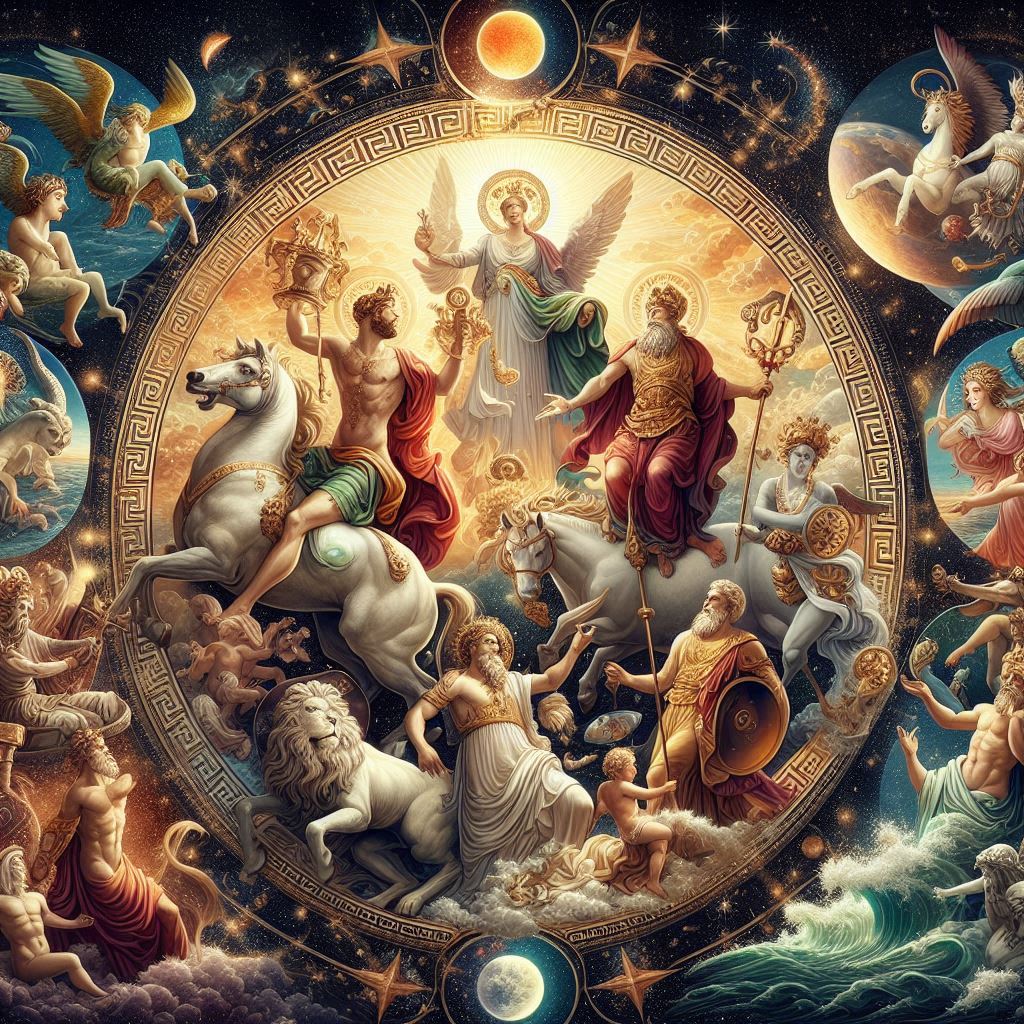
  • Greek and Roman Gods and Goddesses

    Greek and Roman Gods and Goddesses

    There are many theories and reasons behind the birth of civilisations. Mythology plays a vital role in making that civilisation concrete. It contains many legends, tales, folklore, heroes, and more. Any civilisation originated long ago with the ancient people trying to bring humanity to the next level.

    The word civilisation comes from the Latin “civitas” or “city”. The first four civilisations built were the Mesopotamians, Egyptians, the Indus Valley, and the Chinese.

    All such societies have mythologies about their culture, love for nature, honour, and devotion to their creators or gods. Such honour can still be seen in the beautiful monuments, temples, historical buildings, cathedrals and even some local buildings. They remind the people of ancient Greece, Rome, and other religious deities and Gods to teach them their culture, their relationship with the gods, their ancestral worship, the balance between good and evil, their respect and fears towards others creations, and the afterlife.

    Thus, many mythologies were created, combining facts and stories. When people think of mythology, they are usually reminded of Greek and Roman mythology, known for its grandeur and knots. Zeus, Hercules, Athena, and Poseidon are a few well-known names associated with such legendary myths. Several movies represent these characters, including Hercules and Clash of the Titans.

    The following are the Gods, Goddesses, heroes that are equivalent on both countries.

    Chaos was the origin of the cosmos and time according to the Greek mythology.

    UranusUranusFather of the Titans  
    ZeusJupiterKing of Gods  
    HeraJuno  Goddess of Marriage
    PoseidonNeptuneGod of the Sea  
    CronusSaturnYoungest son of Uranus; Father of Zeus  
    AphroditeVenusGoddess of love  
    HadesPlutoGod of the Underworld  
    AresMarsGod of War  
    EosAurora  Goddess of the Dawn
    HeraclesHerculesSon of Zeus  
    OdysseusUlyssesGreek and Roman Hero  
    SeleneLuna.Goddess of the Moon  
    GaiaTerraGoddess of Earth  
    ErosCupid  God of love
    PanFaun  God of Shepherds
    HeliosSol  The Sun God
    HephaestusVulcanGod of the Forge and  Sculpture
    DemeterCeres  Goddess of the Harvest
    NikeVictoria  Goddess of Victory
    RheaOps  Mother of Zeus
    Hypnos / HypnusSomnus  God of Sleep
    Nyx   Goddess of Night / Mother of Hypnos
    Erebus   God of Darkness
  • The Religion of England

    All the people of England were the members of the Christian church in one way or another. Pope in Rome was regarded as the head of the church. Later, during the reformation, people were divided and there evolved two groups, namely, the Catholics and the Protestants. When the Catholics were loyal to the Pope, the people who protested certain doctrines of the church became the Protestants who were against the Pope. 

    Anglicanism and Catholicism

    Anglicanism or Catholicism was considered the main national religion of then England. They are both Christian churches and rely on the Eastern Orthodox churches. Both the Anglicans and Roman Catholics were much similar in reading the Bible and yet differed in various ways. Catholics consider the hierarchy in the church and the Catholic Priests do not marry, whereas the Anglicans did not accept the supremacy of the Pope and their priests were married.  

    Head of the Church of England

    As Anglicanism was the official religion of England, most of the people belonged to the Church of England. It was mostly connected by a network of parishes. And each of this parish was in the charge of a Rector or Vicar. The Archbishops of Canterbury in the South and York in the North were powerful and superior and the King or the Queen was the real head of the Church of England. 

    Divisions 

    In the 17th century there was a division into two groups namely the high church and the low church. The high church members gave a high place to authority whereas the low church members did not give a high place to authority. There was no difference between the rituals of the Roman Catholics and the Anglo Catholics except that they did not accept the supremacy of the Pope. 

    Non-Conformists 

    Queen Elizabeth brought about certain reforms to which certain people did not conform. They were the people who were nicknamed Puritans. They wanted to purify the Church of England of all Roman Catholic practices. Their descendants were known as Dissenters. Those dissenters were called Non-Conformists and the most important of which were the Methodists, the Baptists, the Congregationists, the Presbyterians and Quakers or the member of the Society of Friends

    Methodism 

    Methodism was the closest to the Church of England and was started in 1729. They were named Methodists for the way they had followed methodically in practising their Christian faith.

    John Wesley and George Wakefield were the leaders of the group. Wesley believed in Armenianism and Whitefield believed in Calvin’s doctrine. In 1795 the methodists became an independent body and in 1932 the methodist bodies became united. 

    The Baptists 

    The Baptists, as a sect came into existence in the middle of the seventeenth century. They believed that faith is a fact between the God and an individual. The most famous of England Baptists was John Bunyan who famously wrote the book, The Pilgrim’s Progress. Baptist belief was introduced into America in 1639 by Roger Williams. 

    It’s basic belief was that the only people who have professed their faith can be baptised, unlike the infant baptism practiced by most other Christian faiths. The Baptist missionary society founded in 1792 was the first English organisation for foreign missions. 

    Congregationalism 

    This started with the Protestant Reformation. One of the groups separated themselves completely from them and called themselves Congregationalists. For them, Christ was the only head of the church and the Bible was a sufficient role of faith. 

    Presbyterians

    They were a group of Protestant Christians without Bishops; they were predominant in their reformation period. They displaced the Church of England at least for a time. It is rooted in the  Protestant Reformation of the sixteenth century. When the Catholic church did not accept the reformers, there emerged a number of other theological movements with different denominations as this one.

    Quakerism or the Society of Friends 

    Quakers are the people who belong to a Protestant Christian set of denominations historically known as the Religious Society of Friends. This was established during the short period of between 1648 and 1650 by George Fox.  They were called quakers because they quacked when they spoke under divine inspiration . They had the faith that every man was guided by God. They were against all doctrines and they also did a lot of charitable works.  William Penn and Elizabeth Fry were the famous quakers. 

    Unitarianism 

    Unitarianism basically denied the doctrine of Trinity. It prevailed in the mid nineteenth century and became a religion of reason. It was under the leadership of James Martineau of England. Several other notable people are Ralph Waldo Emerson and Theodore Parker of the United States, S T Coleridge,  Elizabeth Gaskell and Sir Isaac Newton. 

    Adventists

    Adventists were the various groups of Christians who had believed that the second coming of Christ was most imminent.  The first coming of Christ was as the savior of the world the second coming of Christ was expected to be as a Judge of mankind. The Seventh-day Adventists Church considered Saturday as their day of rest. 

  • Difference between a First Language and a Second Language

    A first language is the mother tongue or a native language of a person and it always is natural (learning). The First language develops by itself as an inborn instinct. It also develops through the exposure a child gets from his/her kins. It comes as an inheritance or a legacy and also as a birthright. This process of acquiring a first language is usually naturally fast; learning with full proficiency. A child begins to learn its first language which is generally called a telegraphic speech. The first language is subconscious and a natural part of a person’s everyday life.

    Age is the most important factor that makes a child feel that the second language is totally different from the first language. A child who has already acquired full proficiency in its first language is capable of learning a second language. Whereas it is difficult in the case of an adult. A child’s personality does not make much difference in the acquisition of a first language but makes more difference in learning the second language. An introvert personality shows slow progress but an extrovert shows quick progress.

    Culture: The first language seems to be the most important factor in a person’s culture. Whereas the second language does not necessarily be more significant as the former.

    Motivation: Motivation is an important factor for second language learning. Since it is a natural phenomenon it is not much needed for learning a person’s first language.

    Mother Tongue: Mother Tongue is the first language of a person because it does not depend on the structure of the sentence. A first language has its influence on the second language but not vice versa.

    A second language is ‘learned’. It’s the language learnt by a person for easier communication with the native speaker of that particular language. It is also a personal choice taken to be fixed by the person who learns it voluntarily. There are many alternatives to choose a second language as it is ‘learned’ and also as it’s not an ‘acquired’ form of learning. In particular it can be mentioned that learning a second language is never rapid, and varies from language to language and from person to person. Learning a second language needs full efficiency of the first language since it is entirely new to learn and more importantly it could be learning with the influence and help of a person’s mother tongue or a first language.

  • Abbreviations on Language Teaching

    Following are the abbreviations in relation to teaching English Certification Courses and Exams.

    AAAL- American Association for Applied Linguistics

    ACTFL – American Council on the Teaching of Foreign Languages

    AE – American English

    ARELS – Association of Recognised English Language Services

    BAAL – British Association of Applied Linguistics

    BASELT – British Association of State English Language Teaching

    BC-British CouncilBEC – Business English Certificate. The Cambridge Business English Exam certificate

    BrE- British English

    BVT – Bilingual Vocational Training

    CAE – Certificate in Advanced English

    CALI – Computer–Assisted Language Instruction

    CALL – Computer Assisted Language Learning

    CanE – Canadian English

    CAT – Computer Adaptive Testing

    CBT – Computer Based Teaching

    CEELT – Cambridge Examination In English for Language Teachers

    CEIBT – Certificate in English for International Business and Trade for advanced levels

    CPE – Certificate of Proficiency in English

    CELTA – Certificate in English Language Teaching to adults, the Cambridge/RSA Teaching Certificate. Its also known as CTEFLA

    CILT – Centre for Information on Language Teaching and Research

    DELTA – Diplomo in English Language Teaching in the Cambridge/RSA Language Teaching Scheme

    DOS – Director of Studies

    DTEFLA – Certificate in the Teaching of English as a Foreign Language to Adults (replaced by DELTA)

    EAP – English for Academic Purposes

    ECCE – Exam for the Certificate of Competency in English at low levels at Michigan University

    ECPE – Exam for the Certificate of Proficiency in English at the higher level at Michigan University

    ECIS – European Council of International Schools

    EGP-English for General Purposes

    EIP- English as an International Language

    ELICOS – English Language Intensive Courses for Overseas Students, Australian Government

    ESL – English as a Second Language

    ESOL – English for Speakers of Other Languages

    ESP – English for Specific Purposes (business, tourism, etc)

    ETS – Educational Testing Service

    FCE – First Certificate in English

    GMAT – Graduate Management Admission Test, which measures general verbal, mathematical, and analytical writing skills

    GPA – Grade Point Average

    GRE – Graduate Record Examination, an evaluation test for graduate examination to colleges and universities in the US

    IATEFL – International Association of Teachers of English as a Foreign Language

    IELTS – International English Language Testing Systems

    IPA – International Phonetic Association

    JALT – Japan Association for Language Teaching

    K12 – Kindergarten through 12th grade

    KET – Key English Test, the most elementary of Cambridge’s series of exams

    L1- Language 1 or native language

    L2 – Language 2 or the language one in learning

    LEP – Limited English ProficientLL – Language Learning

    MT – Mother Tongue

    MTELP – Michigan Test of English Language Proficiency

    NATECLA – National Association for Teaching English and other Community Languages to Adults(UK)

    NATESOL – National Association of Teachers of English for Speakers of Other Languages

    NCTE – National Council of Teachers of English

    NLP – Neuro Linguistic Programming

    NNEST – Non-Native English Speaking Teacher

    NNL- Non-Native LanguageOE – Old English

    OED – Oxford English Dictionary

    PET – Preliminary English Test, the second of Cambridge’s series of exams

    RP – Received Pronunciation, the “standard “ British pronounciation RSA/Cambridge

    D – TEFLA- Diploma of Teaching English as a Foreign Language, the advanced qualification for EFL teachers who have already completed the C- TEFLA

    SAE – Standard American English

    SAT – Scholastic Assessment (Aptitude) Test, a pre-university entrance exam in the USA

    TEFL – Teaching English as Foreign LanguageTEFLA – Teaching English as a Foreign Language to Adults

    TEIL – Teaching English as a Second Language

    TESOL – Teaching English to Speakers of Other Languages

    TOEFL – Test of English as a Foreign Language, the most common English Proficiency exam for North American Universities and Colleges

    TOEIC – Test of English for International Communication

    VE – Vocational English

    VESL – Vocational English as a Second Language

    YLE – Young Learners English Tests, the Cambridge Examinations for young learners